Loading
Mangrove + water resilienceActive
Women-led mangrove nurseries and plantation that rebuild the living edge between the Sundarbans villages and the tide.
01The challenge
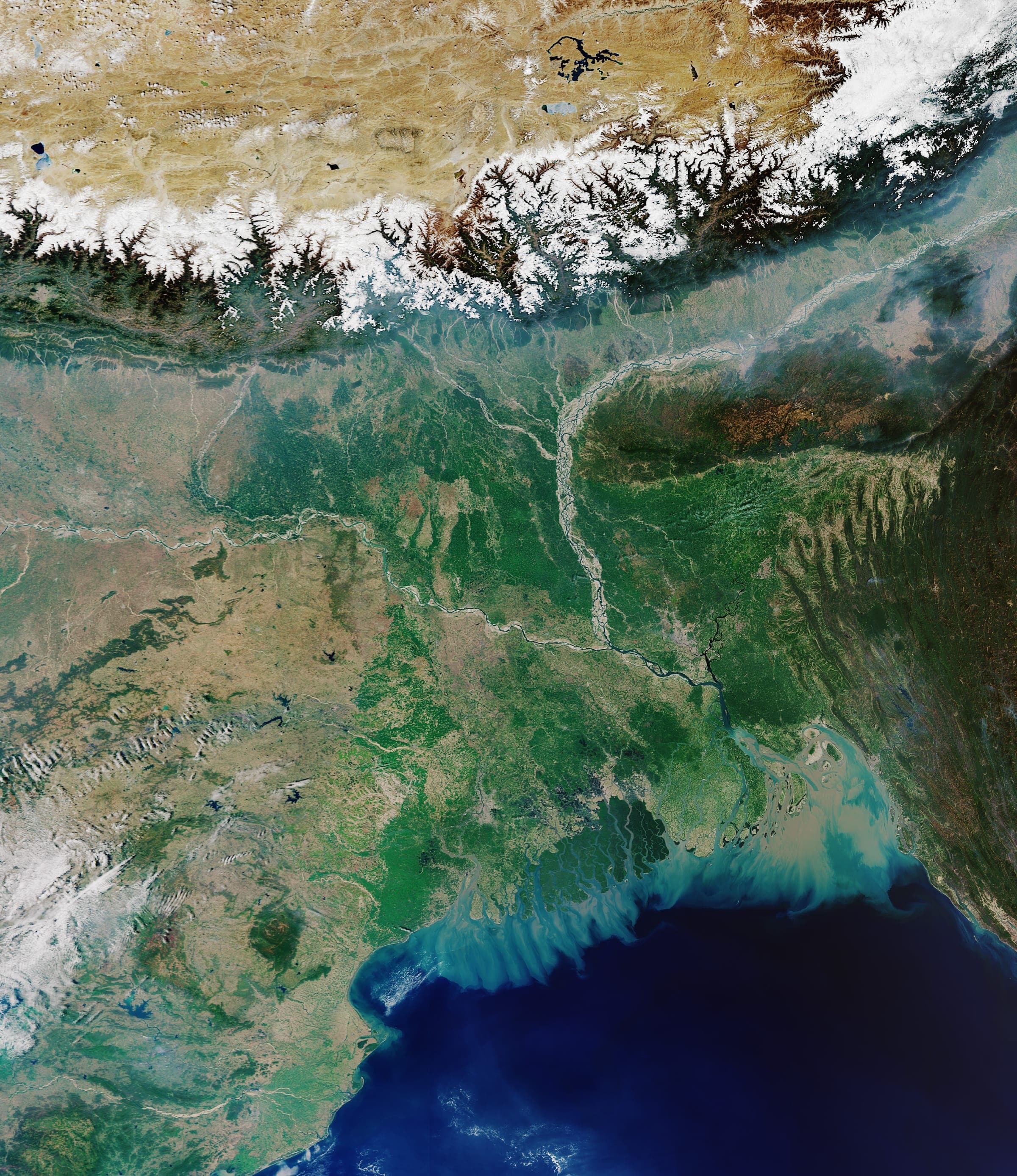
The Indian Sundarbans are home to millions of people living on low islands protected by earthen embankments. Cyclones, rising seas and eroding banks keep pushing saltwater into fields and freshwater ponds.
Where the mangrove fringe has been lost, embankments take the full force of the tide, and each breach can salinise land and drinking water for years.
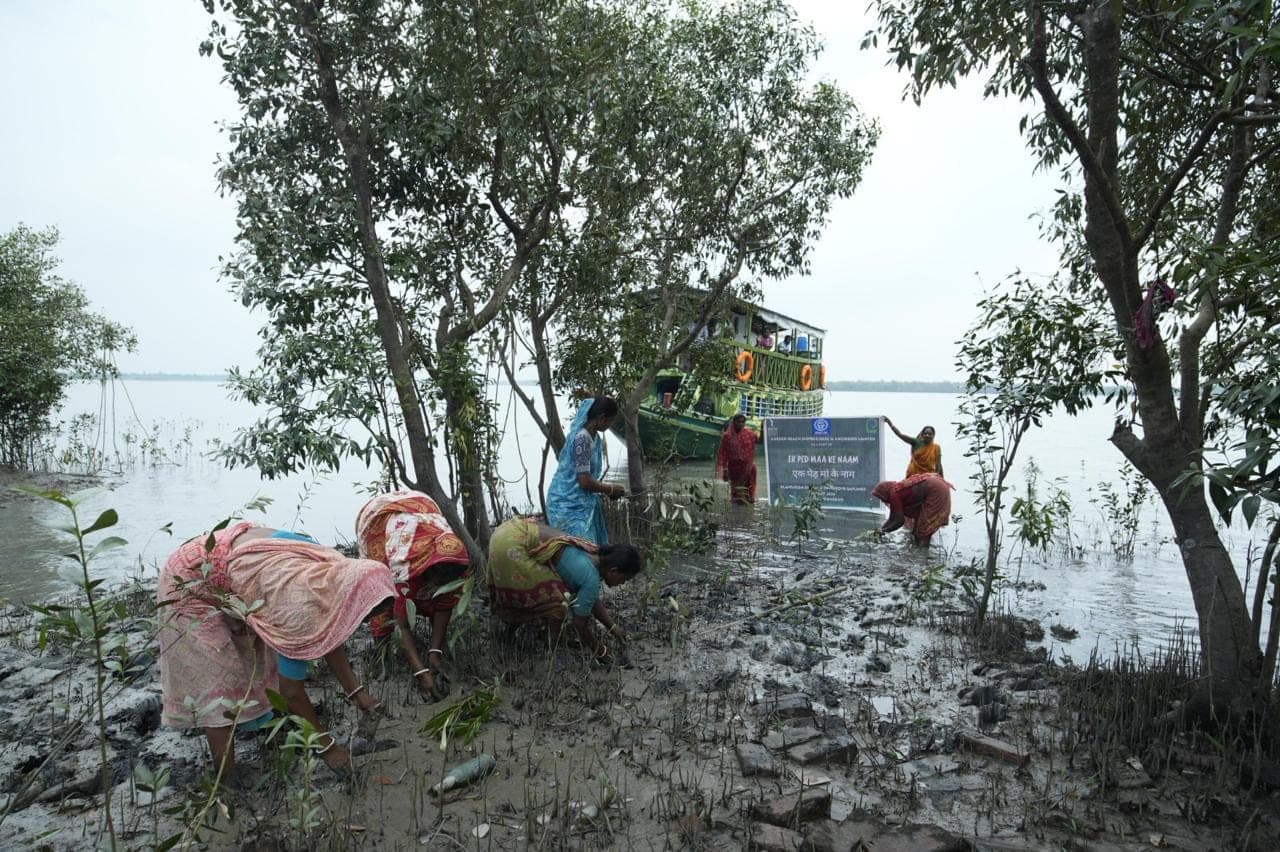
Women from local villages collect propagules, raise saplings in community nurseries and lead planting. It is paid work that builds local expertise.
Sites are chosen by elevation, tidal inundation and salinity, with species matched to each zone and aftercare planned for the first critical years.
Plantation days with schools make the mangrove belt something the next generation understands and defends.
03Community
Mangrove work is led by women from Sundarbans villages, with schools and local community groups taking part in plantation and aftercare.
“Our village is now better protected from floods.”
04Impact
Figures are published once they have a source. Each carries its evidence status. How we measure.
Saplings planted at this site: figure pending verification
Survival after 12 months: figure pending verification
Hectares under restoration: figure pending verification
Women in nursery and planting work: figure pending verification
05Field gallery
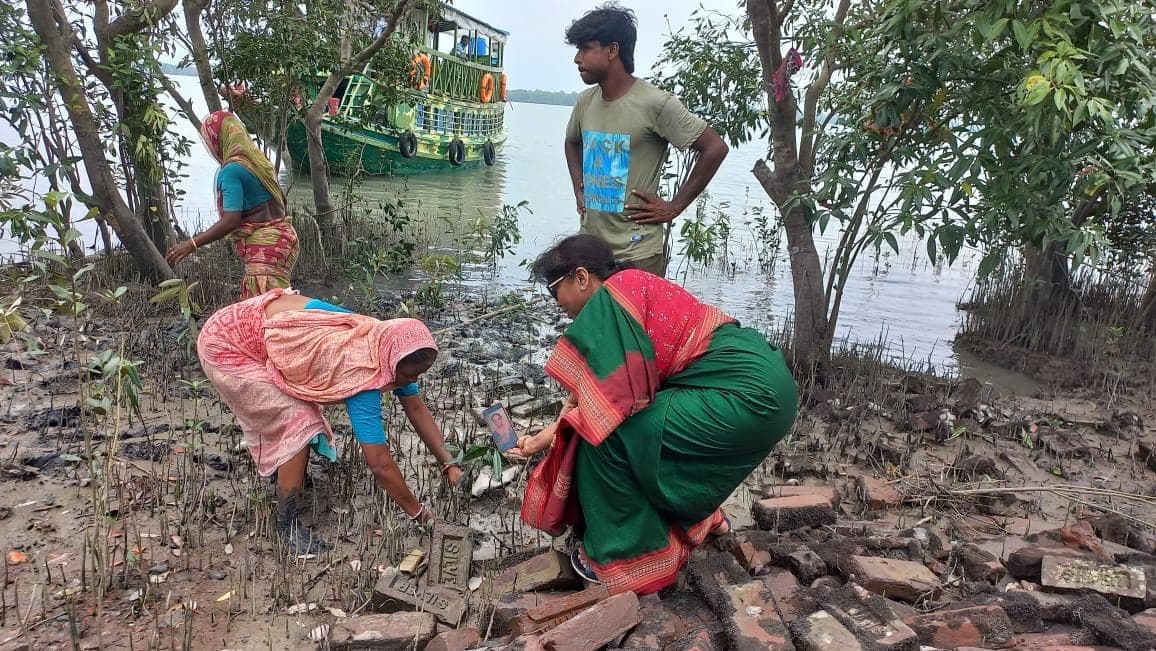
Women plant mangrove saplings among the stones of an eroding riverbank
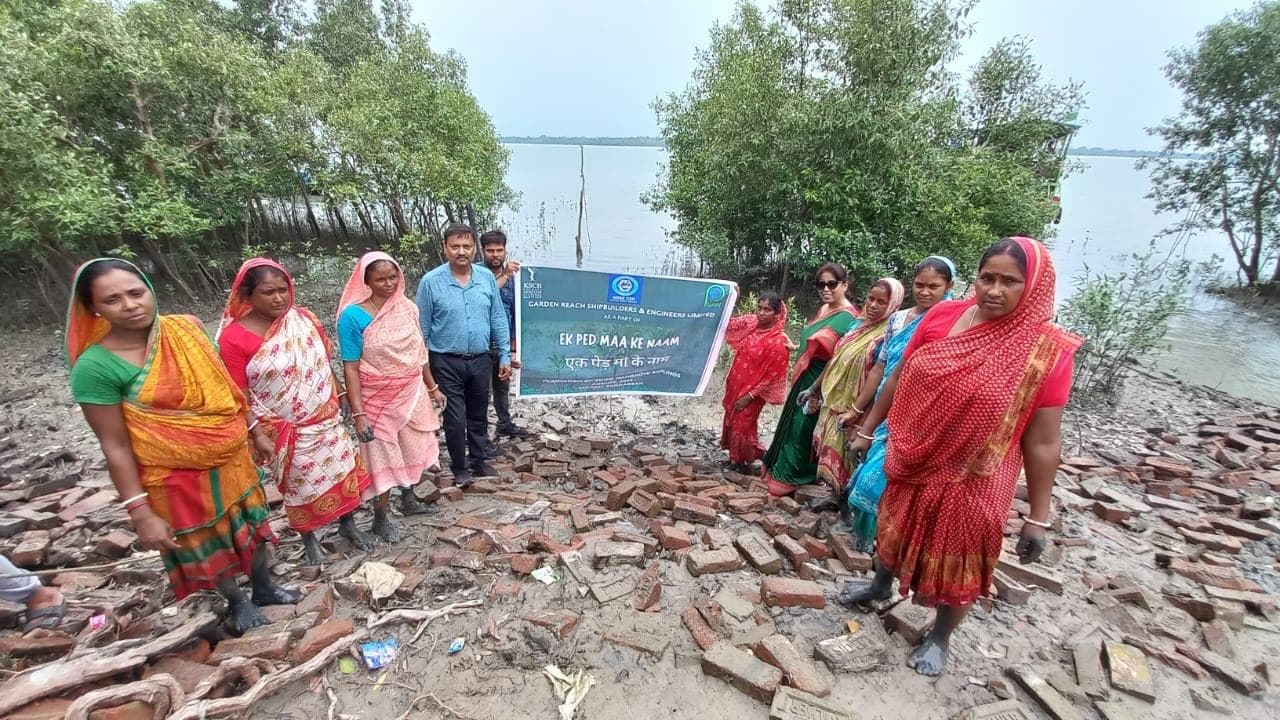
Village women gather on the shore with the "Ek Ped Maa Ke Naam" plantation banner
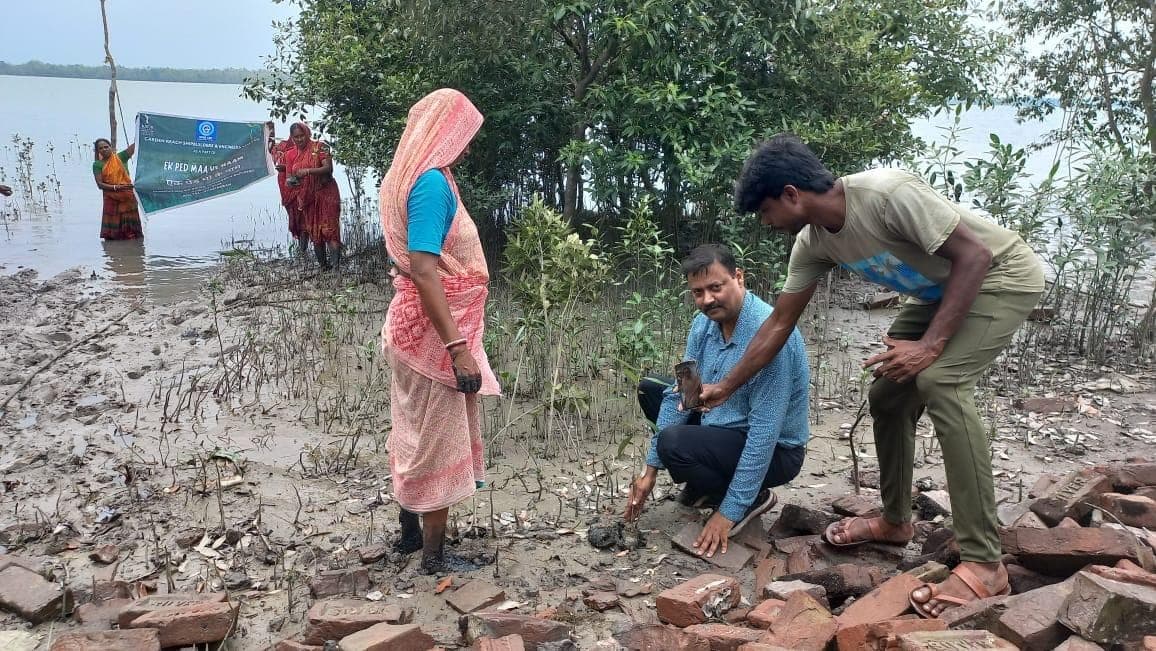
Planet Mama team members plant a sapling with women from the village
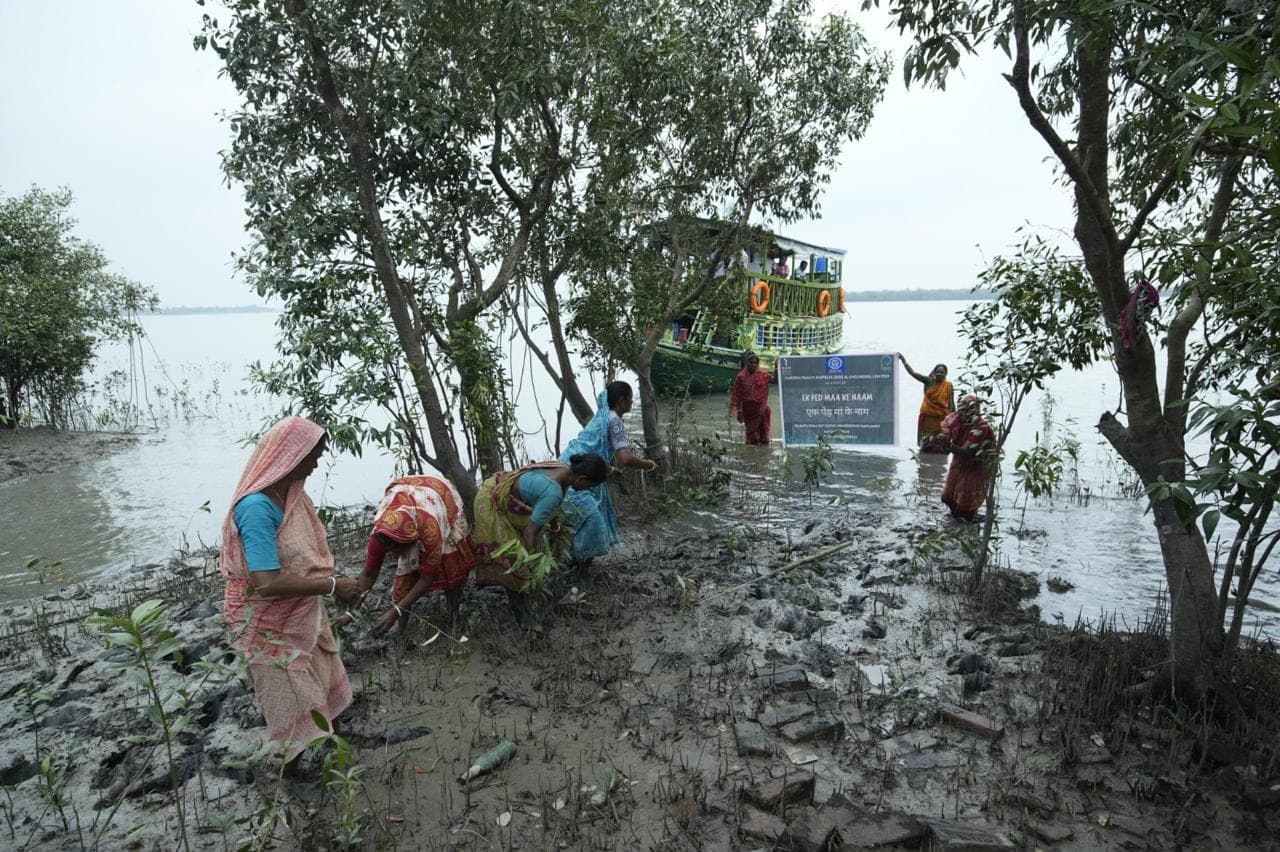
Planting along the tidal shore as the water comes in
Field photography from Planet Mama projects.
06Climate & carbon
No carbon credits have been issued. Any carbon figure for this site is an early estimate and will be labelled as such.
Related stories
Fund it, partner on it, or help us measure it better.